What EBOO is
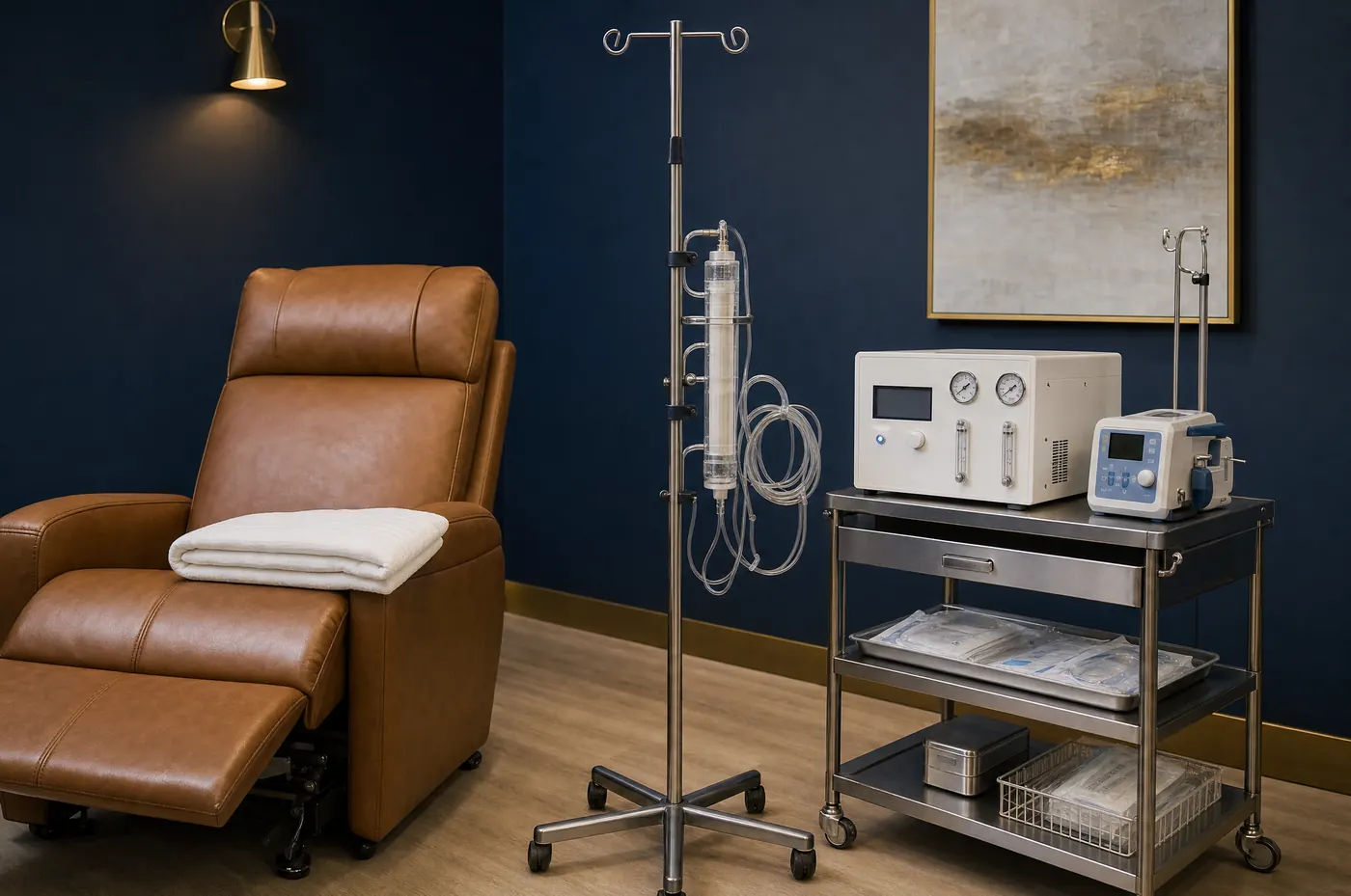
EBOO stands for extracorporeal blood oxygenation and ozonation. Extracorporeal means outside the body. During a session, blood leaves through one IV line, passes through a filter where it is exposed to a measured mix of medical oxygen and ozone, and returns through a second line. The circuit runs continuously, so blood is treated and returned throughout the session rather than in a single batch.
The method was developed in Italy in the 1990s and 2000s by researchers who were already studying ozone applied to blood. Their idea was to treat a larger volume of blood than earlier ozone methods allowed, using equipment adapted from dialysis.
How EBOO compares with other ozone methods
The older and more common approach is major autohemotherapy. A fixed amount of blood is drawn into a sterile bag, mixed with oxygen and ozone, and infused back. It is shorter and simpler, and it treats only what fits in the bag.
EBOO uses a filter circuit and runs for longer, which is why it needs a dedicated setup, two IV lines and a clinician watching the whole time. Neither method should be confused with ozone generators sold for home use, which are a different product category entirely.
What the research shows so far
The published evidence on EBOO is small. The best known study is a 2005 controlled trial in 28 people with peripheral artery disease, which compared EBOO with a standard drug infusion and reported better healing of skin lesions in the EBOO group. The same research group published a broader review of clinical and laboratory observations that year.
Researchers have proposed that a brief, controlled exposure to ozone acts as a mild oxidative signal that prompts the body's own antioxidant responses. That is a working hypothesis built mostly on laboratory data. There are no large randomized trials of EBOO for longevity, detoxification or general wellness, and anyone who tells you otherwise is overstating the record.
Regulators are cautious too. The FDA has not approved ozone therapy for any medical condition, and its device rules describe ozone as a toxic gas with no proven medical use in the concentrations those rules cover. That is one more reason EBOO belongs in a clinic, delivered by trained staff, after a medical review.
Who should not have EBOO
A provider screens every candidate before a first session. Reasons people are commonly turned down or asked to wait include:
- Pregnancy or breastfeeding
- G6PD deficiency, an inherited enzyme condition that makes red blood cells more fragile under oxidative stress
- Uncontrolled hyperthyroidism
- Bleeding disorders, or medications that make anticoagulation in the circuit unsafe
- Very poor vein access, since EBOO needs two reliable IV sites
Common side effects are mild: bruising at the IV sites, lightheadedness and feeling tired for the rest of the day. Your provider will go through your own risks before you agree to anything.
Questions to ask any EBOO provider
EBOO is offered by a growing number of clinics, and standards vary. Before you book anywhere, including with us, it is reasonable to ask:
- Who places the lines, and who supervises the session from start to finish
- How the ozone concentration is set and measured during the session
- Which anticoagulant the circuit uses and how they screen for bleeding risk
- Which labs they check first, such as a complete blood count and G6PD
- What happens if a line stops working or you feel unwell partway through
A clinic that answers those questions clearly, without hesitation, is usually one that takes the procedure seriously.
How to prepare
Eat a normal meal beforehand and drink water through the morning, since well-hydrated veins make placing the lines easier. Wear a top with sleeves that roll up past the elbow. Bring a current list of your medications and supplements, and plan a lighter afternoon in case you feel tired.
What a session at LYV looks like
Every EBOO plan at LYV starts with a provider consult and a look at recent labs. If you do not have current bloodwork, many people begin with advanced testing so the decision is made with real numbers.
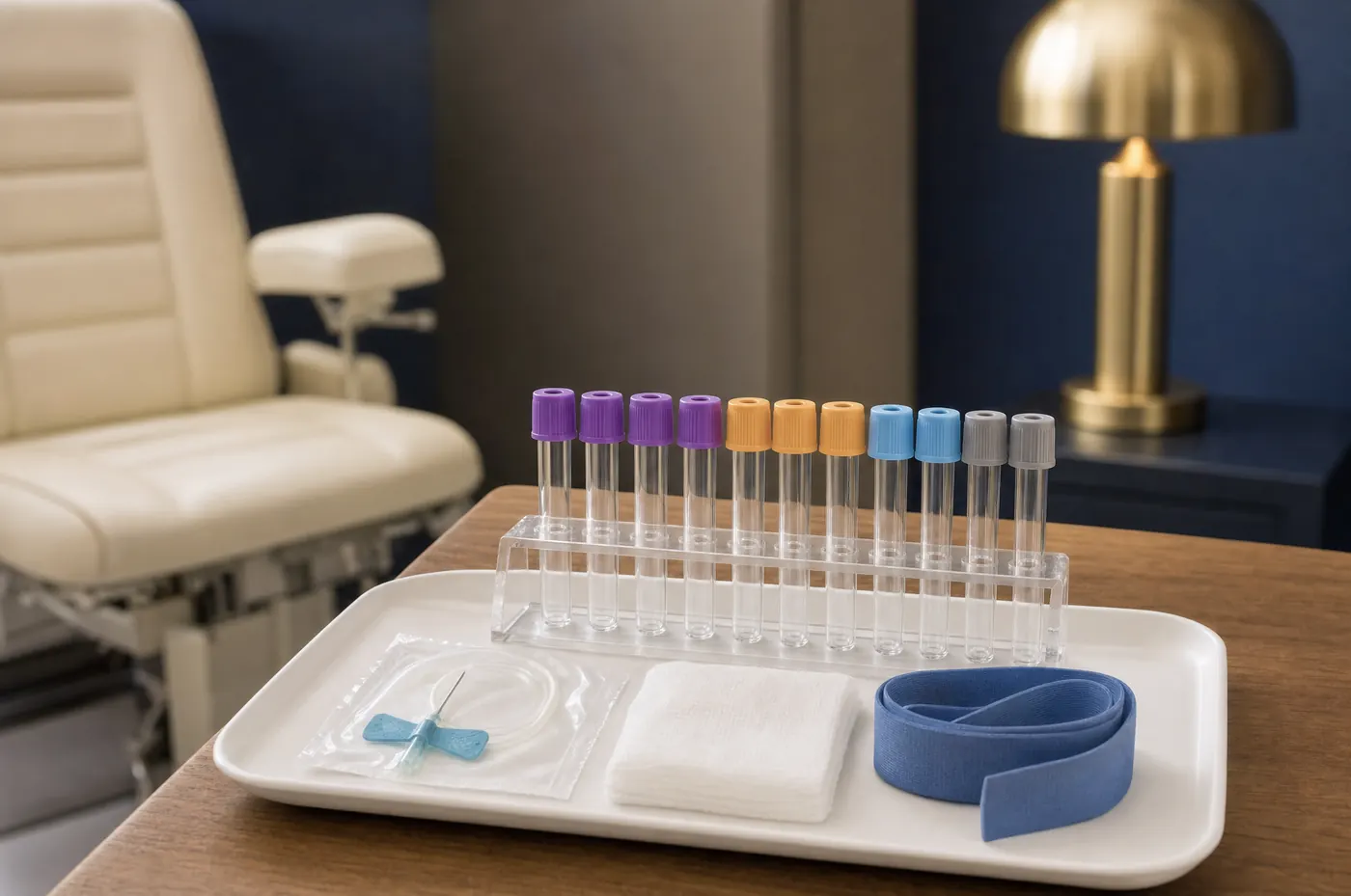
On the day, you settle into a reclined chair in our EBOO suite on the lower level of 1870 W 25th Street. A clinician places both lines, starts the circuit and stays with you for the 60 to 90 minutes you are in the chair. Most people read or rest. Afterward we check how you feel, remove the lines and talk about whether more sessions make sense. EBOO is also part of our Advanced Cellular Detox package. The EBOO page has the practical details.
EBOO is not FDA approved to diagnose, treat, cure or prevent any disease. Individual experiences vary.
References
- Di Paolo N, et al. Extracorporeal blood oxygenation and ozonation (EBOO): a controlled trial in patients with peripheral artery disease. Int J Artif Organs. 2005.
- Di Paolo N, et al. Extracorporeal blood oxygenation and ozonation: clinical and biological implications of ozone therapy. Redox Rep. 2005.
- Bocci V, et al. The ozone paradox: ozone is a strong oxidant as well as a medical drug. Med Res Rev. 2009.
- U.S. Code of Federal Regulations. 21 CFR 801.415, Maximum acceptable level of ozone.