
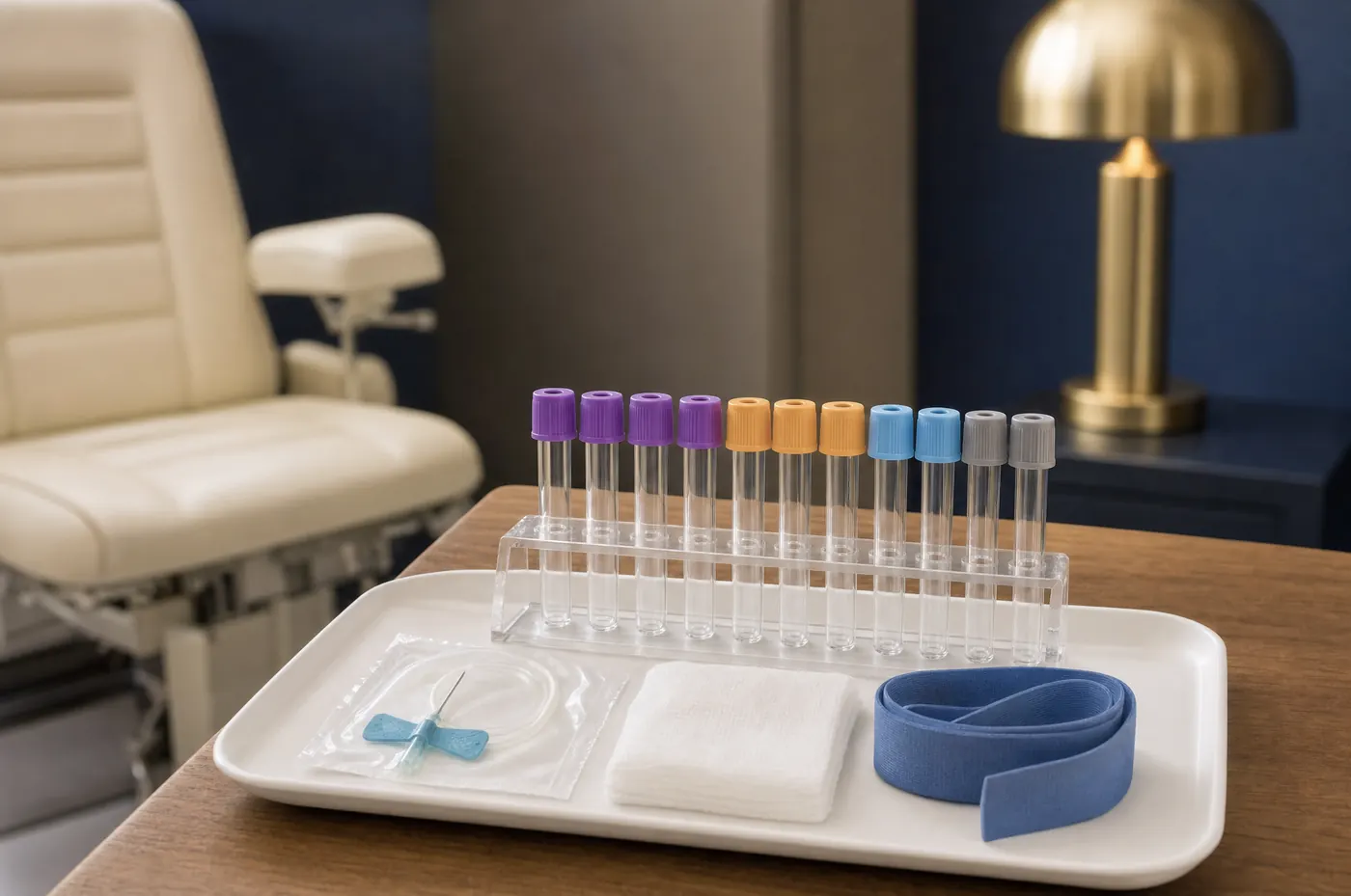
What a standard physical usually covers
A typical annual visit includes a basic metabolic panel, a complete blood count, a standard cholesterol panel and sometimes an A1c for blood sugar. Those tests are valuable and catch a lot. They were designed to screen for common problems, which leaves gaps if your goal is a detailed picture of how your body is doing.
Cardiovascular markers worth knowing
Apolipoprotein B (ApoB) counts the particles that carry cholesterol into artery walls. A 2019 review in JAMA Cardiology makes the case that ApoB reflects cardiovascular risk more accurately than LDL cholesterol alone, especially when the two disagree.
Lipoprotein(a), or Lp(a), is a largely inherited particle linked to heart disease and aortic valve narrowing. The European Atherosclerosis Society recommends that every adult have it measured at least once, because a high level changes how aggressively other risks should be managed.
Other markers that often add context include fasting insulin, high-sensitivity CRP, a fuller thyroid panel, vitamin D and, depending on age and goals, hormones.
Specialty tests
Some questions need tests outside routine bloodwork. Examples we run include:
- GI Effects, a stool test that looks at digestion, inflammation and the gut microbiome
- NutrEval, which measures nutrient and metabolic markers
- An environmental toxin test for common exposures from home, work and food
- A fatty acid profile showing the fats in your cell membranes
- A methylation panel and the TruAge epigenetic age test, covered in our genetic and methylation guide
Imaging and screening
Imaging adds structure to the numbers. A DEXA scan measures bone density and body composition. Cleerly analyzes coronary plaque from a heart CT scan. Prenuvo offers whole-body MRI, which can find early issues and also incidental findings that need follow-up, something to weigh before you book.
Galleri by GRAIL is a blood test that looks for signals shared by many cancers. In the PATHFINDER study of 6,621 adults aged 50 and older, a cancer signal was detected in 1.4% of participants, and 38% of those were confirmed to have cancer. Galleri does not replace the screenings your doctor recommends.
Reading results in context
Lab reports flag values outside a reference range, which is usually built from the middle 95% of a tested population. A result inside the range is not automatically ideal, and one just outside it is not automatically a problem. Trends across several draws, your symptoms and your family history all matter. That is why every LYV result is reviewed with a provider rather than sent as a report alone.
More is not always better
Every test can produce a borderline or unexpected result, and each one can lead to more tests. The best panel is the one matched to your history and your questions, with a clear plan for what you will do with the answers. That is why our testing starts with a conversation rather than a checklist.
How to prepare for a blood draw
- Follow the fasting instructions you are given. Some panels need 8 to 12 hours without food
- Drink water, which keeps veins easier to find
- Tell us about every supplement. High-dose biotin, common in hair and nail products, can distort some lab results
- Book a morning draw if hormones are on the panel, since several follow a daily rhythm
Small details like these make results more reliable and reduce the chance of a repeat draw.
How often to retest
Some markers, such as Lp(a), rarely change and usually need measuring only once. Others, such as ApoB, insulin and vitamin D, respond to diet, training and treatment, so they are worth tracking. A common rhythm is a full baseline, then a targeted retest a few months after any change to your plan, then once or twice a year.
How testing works at LYV
In a consult, we match tests to your history and goals. Bloodwork is drawn at the clinic or at home, and imaging is scheduled for you. A provider then sits down with you, goes through every result and gives you a written plan with priorities, next steps and a date to retest. See the full menu on our advanced testing page, or look at LYV Restored, which repeats advanced blood panels three times, about every 17 weeks.
Testing at LYV supports conversations with your provider and is not a substitute for care from your own physician.
References
- Sniderman AD, et al. Apolipoprotein B particles and cardiovascular disease: a narrative review. JAMA Cardiol. 2019.
- Kronenberg F, et al. Lipoprotein(a) in atherosclerotic cardiovascular disease and aortic stenosis: a European Atherosclerosis Society consensus statement. Eur Heart J. 2022.
- Schrag D, et al. Blood-based tests for multicancer early detection (PATHFINDER): a prospective cohort study. Lancet. 2023.
- MedlinePlus. Lab tests.